
Making software teams sustainably efficient
Practical mentoring for software developers and tech teams: From Clean Code to Test-Driven Development to Domain-Driven Design. Knowledge that lasts.
Why does my team need mentoring?
YouTube tutorials and online courses are good for basics. But complex topics such as software architecture, clean code in legacy systems or DDD in real projects can only be learned through practice and feedback.
Typical situations in which mentoring makes sense
Skill gap in the team
Junior developers dominate, senior know-how is missing.
Code quality is decreasing
Each feature brings new bugs, blind refactoring is too risky.
New technologies
Migration to microservices, cloud or new frameworks.
Accelerate onboarding
New developers should become productive faster.
Team growth
The number of developers has been increased but the quality is suffering.
New technologies
Migration to microservices, cloud or new frameworks.
Mentoring programs
Choose the right format for your team - from focused topic training to long-term support.
Clean Code
Maintainable code instead of technical debt: SOLID Principles, Design Patterns and concrete refactoring techniques directly from practice.
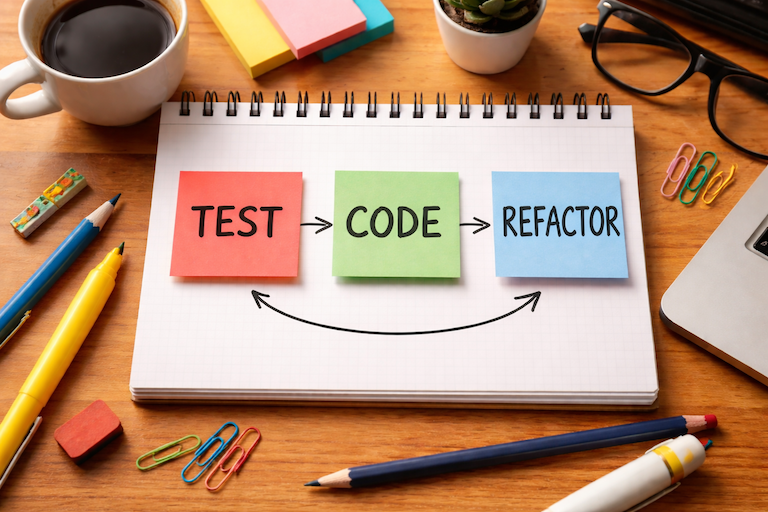
TDD
Test-Driven Development as a design tool instead of a mandatory exercise: Red-Green-Refactor, test pyramid and sustainable testing strategies for robust software.

Embedded Mentoring
I work directly with your team and impart know-how in the ongoing project: practical mentoring, hands-on in everyday life, over 3 to 6 months.

Team workshops
Targeted skill boosts for your team: Clean Architecture, Microservices, Legacy Refactoring, Kubernetes and other practical topics.

1-on-1 mentoring
Individual support for developers on their way to becoming architects or tech leads: architectural competence, leadership skills and effective technical communication.
Frequently Asked Questions (FAQ)
How long does it take to see results?
Quick wins can be seen after just 2-4 weeks (e.g. first tests, better naming). Significant improvements after 2-3 months (higher test coverage, fewer bugs). Long-term cultural change usually takes 6-12 months.
Does mentoring also work remotely?
Yes, very well in fact. I use pair programming tools, code reviews via Git, and regular video calls. Many teams usually prefer a hybrid approach, with an initial kick-off on site and ongoing mentoring remotely. Individual needs can be taken into account.
What is the difference to online courses?
Team development desired?
Let's develop a mentoring plan for your team together.